Blue Business Card Horizontal: A Strategic Design Choice for Modern Corporate Identity
In the evolving landscape of professional networking, the format and color palette of a business card can significantly influence how a brand is perceived. The Blue Business Card Horizontal has emerged as a distinct option for professionals seeking a balance between traditional corporate reliability and contemporary visual appeal. Unlike vertical layouts that often dominate creative industries, or standard white cards that offer minimal impact, this specific design approach leverages the psychological weight of blue combined with a horizontal orientation to convey stability, trust, and modernity.
This article explores the nuances of the horizontal blue gradient design, analyzing its structural advantages, aesthetic qualities, and suitability for various professional sectors. By understanding the specific characteristics of this template style—ranging from its abstract ocean blue gradation to its editable vector components—professionals can make informed decisions about whether this resource aligns with their branding goals.
The Distinctive Appeal of Horizontal Orientation and Blue Gradients
The decision to utilize a horizontal layout is not merely aesthetic; it fundamentally changes the information hierarchy and the physical handling of the card. In an era where digital screens are predominantly rectangular and horizontal, a horizontal business card feels familiar and ergonomic. It mimics the aspect ratio of web headers and mobile interfaces, creating a subconscious connection between the physical object and the digital world the professional inhabits.
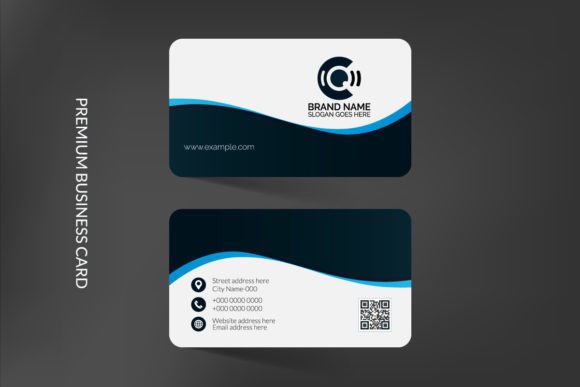
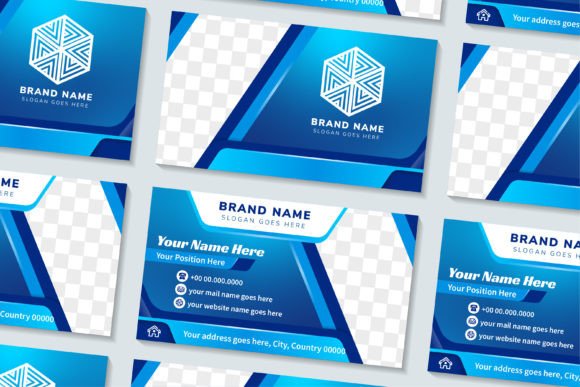
When paired with a modern blue business card gradient, the design gains depth without sacrificing readability. Traditional flat colors can sometimes appear dated or stark in print. However, an ocean blue gradation identity introduces a sense of fluidity and movement. This transition from lighter to darker shades of blue creates a sophisticated backdrop that draws the eye across the card, naturally guiding the viewer's attention from the name and title to the contact details.
The choice of blue is particularly strategic. Color psychology associates blue with competence, loyalty, and calm. For industries such as finance, technology, healthcare, and legal services, this hue reinforces a message of security. The gradient variation adds a layer of creativity, preventing the design from feeling overly conservative. It suggests that while the company is grounded in tradition, it is also forward-thinking and adaptable.
Structural Advantages of the Diagonal Photo Space
A critical feature distinguishing high-quality templates in this category is the inclusion of a diagonal photo space. Standard designs often force photos into rigid squares or rectangles, which can feel static and disconnected from the text. A diagonal placement breaks the visual monotony of the rectangular card frame, adding dynamic energy to the composition.
This layout strategy allows for a more personal touch without cluttering the primary information area. It serves as a visual anchor, humanizing the corporate identity. When designing a minimal presentation, the diagonal element acts as a focal point that organizes the surrounding whitespace effectively. It ensures that the card does not look empty, even when utilizing a sparse, clean typography style common in modern design trends.
Evaluating Technical Specifications and Editability
For designers and non-designers alike, the technical foundation of a template determines its long-term utility. The Blue Business Card Horizontal described here is built on a robust technical framework designed for professional output. The specification of high resolutions 300dpi is a non-negotiable requirement for print quality. At this resolution, text remains sharp, and gradients render smoothly without banding or pixelation, ensuring that the final product looks polished in hand.
The availability of the file in multiple formats—Ai, EPS, JPG, and SVG—offers significant flexibility. The vector-based nature of the graphics (100% vector) means that elements can be scaled infinitely without loss of quality. This is crucial for users who may need to adapt the design for different printing sizes or digital applications later. Furthermore, having the source files in AI and EPS allows for deep customization by graphic professionals, while the JPG and SVG options provide immediate usability for those using simpler editing tools.
The ability to edit text, shapes, and color independently is perhaps the most valuable feature for a diverse user base. Whether a user needs to swap the ocean blue for a corporate navy or adjust the diagonal angle to fit a specific logo, the organized layer structure ensures these changes can be made efficiently. This level of control transforms a generic template into a bespoke asset that accurately reflects a unique brand identity.
Comparative Analysis: Horizontal vs. Vertical and Flat vs. Gradient
When evaluating the Blue Business Card Horizontal, it is essential to compare it against other common market options to determine the best fit. The primary comparison lies in the orientation: horizontal versus vertical.
- Horizontal Layouts: As discussed, these align well with web aesthetics and offer a wider canvas for contact information. They are often preferred by tech companies, architects, and marketing agencies that want to emphasize breadth and connectivity. However, they may take up slightly more space in a wallet or card holder compared to vertical cards.
- Vertical Layouts: These are taller and narrower, often favored by fashion brands, artists, and lifestyle businesses. They stand out in a stack of horizontal cards but can feel less "digital-native" depending on the font choice.
The second major comparison involves the use of gradient colors versus solid flat colors. While solid blue cards are timeless and cost-effective to print, they can lack visual interest in a sea of plain cards. A gradient design, like the one featured in this template, offers a premium feel that elevates the perceived value of the brand. The tradeoff is that gradients require careful color management during the printing process to ensure the transition appears smooth rather than muddy. High-resolution vector files mitigate this risk, but the printer must be capable of handling complex color mixes.
Ideal Use Cases and Potential Limitations
Determining when to choose the Blue Business Card Horizontal depends heavily on the specific context of the user's industry and goals. This design is particularly effective for:
- Tech and Startups: The modern gradient and horizontal format signal innovation and a user-friendly approach.
- Corporate and Finance: The blue color palette conveys trustworthiness, while the clean layout ensures clarity of data.
- Consultants and Freelancers: The diagonal photo space allows for a strong personal brand presence without overwhelming the professional credentials.
However, there are scenarios where this specific template might not be the optimal choice. For highly traditional industries such as law firms or heritage banking institutions, the gradient effect might be perceived as too casual or trendy. In these cases, a solid, matte finish with serif typography might better suit the desired image of permanence and history. Additionally, if a brand's identity relies heavily on a specific shade of red or green, adapting a template dominated by blue hues would require extensive rebranding efforts that could dilute the original concept.
Considerations for Print and Digital Integration
While the Blue Business Card Horizontal is optimized for print, its design principles also translate well to digital environments. The SVG format included in the download allows the design to be used as a favicon, a social media profile header, or a digital signature background. This versatility supports a cohesive branding strategy across all touchpoints.
Nevertheless, users should be aware that the "abstract" nature of the background means it relies on strong typography to remain legible. If the chosen font is too thin or lacks contrast against the blue gradient, the information may become difficult to read, especially in low-light networking situations. The success of the design ultimately hinges on the balance between the artistic background and the functional text elements.
Conclusion: Making an Informed Design Decision
Selecting a business card template is a strategic investment in personal and corporate reputation. The Blue Business Card Horizontal represents a thoughtful convergence of form and function. Its horizontal orientation bridges the gap between physical and digital interactions, while the ocean blue gradient provides a modern, trustworthy aesthetic that stands out in a crowded marketplace.
By offering high-resolution vector files and comprehensive editability, this resource empowers users to create a professional identity that is both unique and scalable. Whether for a startup looking to establish credibility or an established firm seeking a refresh, the key lies in leveraging the template's strengths—such as the dynamic diagonal photo space and the versatile color palette—while remaining mindful of the specific requirements of the target audience. When executed correctly, this design serves not just as a method of exchanging contact data, but as a memorable introduction to a brand's core values.